Geography
INTENT
Geography is the study of the world around us and plays a vital role in helping children understand the natural and human features that shape our planet. At Hetton Lyons, our geography curriculum is underpinned by the key drivers of aspiration, endeavour, and expression, ensuring that children not only acquire geographical knowledge but also develop the attitudes and skills needed to thrive as learners and global citizens.
Through quality first teaching that meets and exceeds the requirements of the National Curriculum, we encourage children to aspire to understand the wider world and their place within it. Geography inspires curiosity and fascination about diverse places, people, cultures, resources, and environments, nurturing ambition and a sense of possibility beyond their immediate experiences.
As an investigative subject, geography promotes endeavour by challenging children to work hard, persevere, and take pride in their learning. Pupils are encouraged to ask questions, carry out enquiries, interpret data, and apply geographical skills with increasing confidence, developing resilience and transferable skills that support learning across the curriculum.
Geography also provides rich opportunities for expression, enabling children to speak clearly, listen carefully, and express their ideas confidently using appropriate geographical vocabulary. Through discussion, debate, presentation, and written outcomes, children learn to communicate their understanding of the Earth’s key physical and human processes effectively, developing both knowledge and voice as they engage thoughtfully with the world around them.
IMPLEMENTATION
Our geography curriculum is shaped by our school vision, which aims to ensure that all children—regardless of background, ability, or additional needs—are supported to flourish and achieve their very best. Teaching is underpinned by the key drivers of aspiration, endeavour, and expression, which are embedded throughout every geography topic to develop confident, resilient, and articulate learners.
We deliver the National Curriculum through a clearly sequenced progression of geographical knowledge and skills, ensuring learning builds systematically year on year. Prior learning is revisited at the start of each unit to identify pupils’ starting points, allowing teaching to be informed by assessment and pupil voice. Lessons are carefully designed to provide appropriate challenge for all learners, promoting endeavour by encouraging pupils to work hard, persevere, and take pride in their learning, in line with our strong commitment to inclusion.
Fieldwork is a core component of our geography curriculum and is embedded within every topic to ensure children develop authentic geographical skills. The local area is used extensively as a learning resource, providing regular opportunities for outdoor learning, observation, data collection, and map work. Where appropriate, school visits and educational trips further enhance learning by offering first-hand experiences of contrasting locations and environments, nurturing aspiration and deepening pupils’ understanding of the wider world.
Sustainability and environmental responsibility are further promoted through our active Eco Team, which plays a key role in developing pupils’ understanding of environmental issues at both a local and global level. The Eco Team works to embed sustainable practices across the school, encouraging children to take responsibility for their environment and apply geographical learning in real-life contexts. This supports pupils in becoming informed, responsible citizens who understand the impact of human activity on the planet.
Opportunities for expression are woven throughout geography lessons, enabling pupils to speak clearly, listen carefully, and communicate their ideas confidently using accurate geographical vocabulary. Children present findings, explain patterns, and reflect on their learning through discussion, writing, and creative outcomes.
High-quality teaching is supported through access to professional resources and planning materials, including DigiMaps, Inspire Education, and Mozaik. Assessment is ongoing and informed by observation, verbal feedback, pupil voice, and work scrutiny. Knowledge organisers are provided at the start of each unit to support understanding and retention of key information, while end-of-unit quizzes are used to assess learning, inform future planning, and ensure progression across the curriculum.
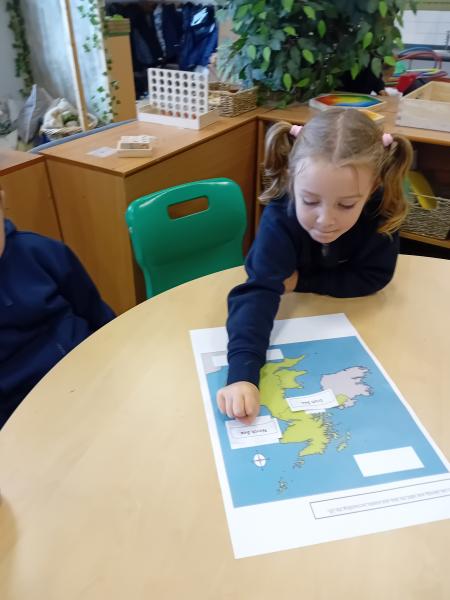
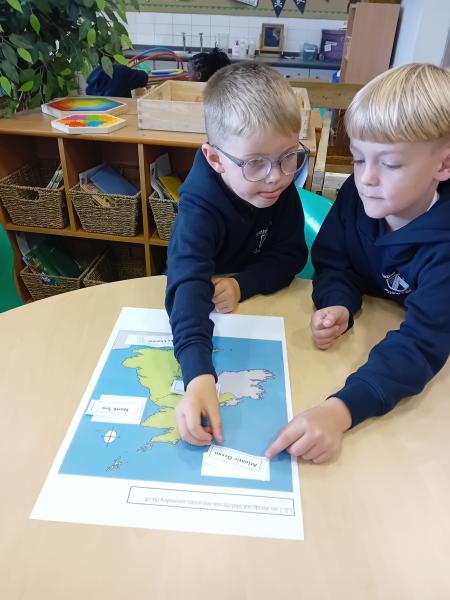
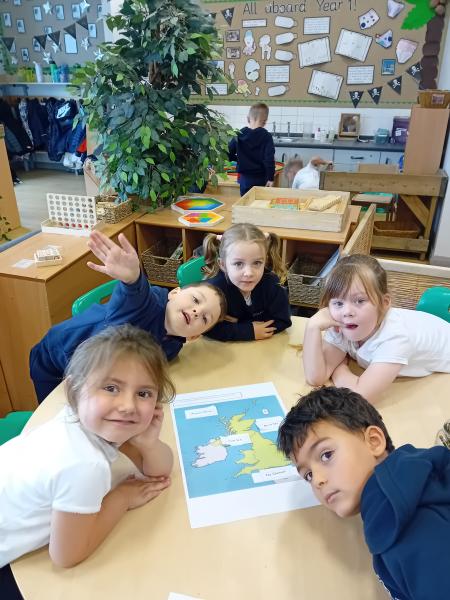
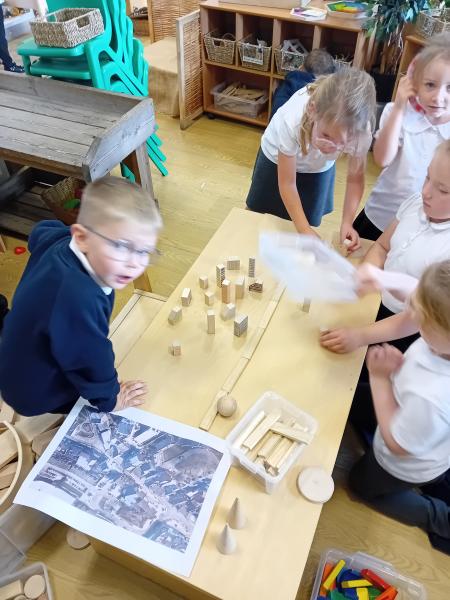
In the EYFS, Geography is taught through the strand 'Understanding the World'and builds on children’s natural curiosity about the world around them. Learning begins with children exploring their immediate environment, such as the classroom, outdoor area, and local community, before gradually extending to wider places and environments. Opportunities are provided for children to observe, explore, and discuss natural and human features, weather, and seasonal changes. Through stories, maps, walks and hands-on exploration, children develop an understanding of similarities and differences between places, as well as respect for different cultures and environments.
IMPACT
By the time pupils leave Hetton Lyons Primary School, they will have developed the knowledge, skills, and attitudes of confident and informed geographers, fully meeting the expectations of the National Curriculum and reflecting our key drivers of aspiration, endeavour, and expression.
Pupils will:
- Have a secure and detailed knowledge of the location and characteristics of a wide range of places, environments, and geographical features at local, national, and global scales.
- Demonstrate a strong understanding of the interdependence and interconnectedness of places, and how human and physical processes interacts shape and influence landscapes and environments.
- Possess a rich and extensive geographical vocabulary, enabling them to describe, explain, and evaluate geographical concepts with increasing accuracy and confidence.
- Show aspiration through curiosity, ambition, and a genuine interest in understanding the wider world and their place within it.
- Apply well-developed enquiry skills, including questioning, investigation, data collection, and analysis, using a range of sources and fieldwork techniques with increasing fluency.
- Demonstrate endeavour by working hard, persevering with challenge, and taking pride in producing high-quality geographical outcomes.
- Draw clear conclusions and construct reasoned, evidence-based arguments to explain patterns, relationships, and geographical processes.
- Use creativity, imagination, and originality to interpret, present, and communicate geographical information through maps, diagrams, writing, discussion, and digital media.
- Demonstrate highly developed fieldwork skills and confidently apply geographical techniques such as map reading, observation, measurement, and data recording in a range of contexts.
- Communicate their ideas effectively, showing expression by speaking clearly, listening carefully, and presenting well-balanced viewpoints using accurate geographical language.
- Develop informed opinions about current and contemporary geographical and environmental issues, including sustainability, demonstrating responsibility, empathy, and respect for the world and its people.
As a result, pupils leave Hetton Lyons with a strong foundation in geography, a passion for learning about the world, and the confidence to engage thoughtfully and responsibly with global and environmental challenges.
Files to Download